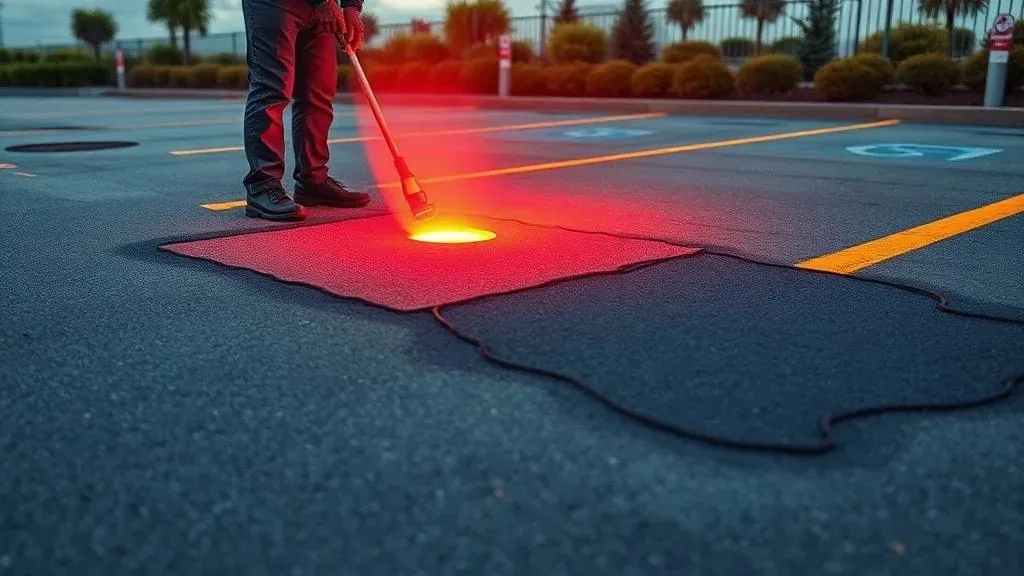
This guide walks through what each kind of damage means, which repair fits, and a simple rule of thumb for deciding when it is time to replace.
Driveway Repair vs. Replacement: Symptom-by-Symptom Decision Guide
| What you see | Likely cause | Usual fix |
|---|---|---|
| Hairline cracks | Aging and temperature movement | Crack seal, then sealcoat |
| Cracks wider than about a quarter inch | Frost movement, water in the base | Rout and seal, or patch |
| A few isolated potholes | Water intrusion and freeze-thaw | Cut out and patch with hot-mix |
| Interconnected "alligator" cracking | Base failure | Rebuild the section or replace |
| Ruts or sunken wheel paths | Weak or overloaded base | Rebuild the section or replace |
| Raised or buckled areas | Frost heave or tree roots | Remove and rebuild, fix the cause |
| Crumbling edges | No edge support, vehicles on the edge | Repair and add shoulder support |
| Puddles that linger | Poor grade | Regrade or overlay with corrected slope |
| Gray, rough, loose stone surface | Oxidation and wear | Sealcoat or overlay if the base is sound |
Driveway Repair Options: Crack Sealing, Patching and Sealcoating
Driveway Repair by Crack Sealing
Cracks are routed, cleaned and filled with hot rubberized sealant that stays flexible in cold weather. This is the cheapest repair there is and one of the most effective, because it keeps water out of the base. See asphalt repair for how this is done properly.
Driveway Repair by Patching
A proper patch cuts back to sound pavement in a clean rectangle, removes loose material and water, tack-coats the edges and fills with compacted hot-mix. A quick shovel of cold-patch into a pothole is a temporary stopgap. If the base under the pothole has failed, the patch must go deeper than just the asphalt.
Driveway Repair by Sealcoating
A sealcoat shields sound asphalt from sun and water. It does not fix structural damage and should follow crack sealing, not replace it. Read more on asphalt sealcoating.
Driveway Resurfacing: When an Overlay Makes Sense
An overlay, a new layer of asphalt placed over the old, can renew a driveway whose base is still sound. It works best when distress is limited to the surface: shallow cracking, raveling, oxidation and minor roughness. It does not work well when cracks are alligatored, wheel paths have sunk or the pavement flexes underfoot, because those problems come back through the new layer. An overlay also raises the driveway's height, which affects garage doors, gutters and street connections. Many driveways are best served by asphalt resurfacing after any failed areas are rebuilt first.
Driveway Replacement: When It Is the Right Call
Replacement is the better value when:
- Large areas show alligator cracking, ruts or sunken sections
- The driveway is roughly 20 years old or older and failing broadly
- Repairs keep reappearing in the same places
- Drainage is wrong and needs the whole surface regraded
- You are changing the layout, widening or adding to the driveway
Replacement removes the failed asphalt and base, rebuilds a compacted crushed rock foundation, corrects grade and drainage, and places new hot-mix. It costs more up front and resets the clock. See driveway paving and our asphalt paving cost guide for what to expect.
Driveway Repair vs. Replacement Rule of Thumb: The 30 Percent Test
A common rule of thumb: if more than about 25 to 30 percent of the driveway needs structural repair, replacement or a rebuild-and-overlay is usually the better investment. Spot repairs on a broadly failing driveway fix the visible problem and leave the rest to fail. A driveway with one pothole and some cracks is a repair candidate. A driveway with sunken wheel paths along its whole length is not.
Age matters too. Asphalt that has been maintained can serve for many years, but pavement near the end of its life is rarely worth heavy repair spending.
Driveway Repair vs. Replacement in Spokane's Freeze-Thaw Climate
Water enters through cracks, freezes, expands and lifts the pavement, then thaws and leaves a weakened base that traffic breaks apart. That cycle can repeat many times each winter. It means that unsealed cracks in fall often become potholes by spring, and that drainage problems are as important as the asphalt itself. Our Spokane freeze-thaw pavement FAQ explains how this works.
Driveway Repair vs. Replacement: A Five-Minute Inspection
- Walk the driveway after rain and note where water stands.
- Look for connected, web-like cracking, especially in wheel paths.
- Sight along the edge and wheel tracks for dips and humps.
- Step on suspect areas. Pavement that flexes is on a failed base.
- Check the edges for crumbling and the surface for loose stone.
Take photos and send them with an estimate request, so a contractor can give a better first opinion.
Driveway Repair vs. Replacement FAQ: Common Questions Answered
Driveway Repair vs. Replacement: How Long Should an Asphalt Driveway Last?
With a good base, proper drainage and regular maintenance, an asphalt driveway can last many years, often well into its second decade. Weak bases and standing water shorten that.
Driveway Repair vs. Replacement: Can I Just Patch Potholes Myself?
Cold-patch is a reasonable temporary fix. For a lasting repair, the damaged area should be cut back to sound pavement, the base repaired if it failed, and hot-mix compacted in place.
Driveway Repair vs. Replacement: Is Sealcoating Worth It on an Old Driveway?
Only if the pavement is structurally sound. Sealcoating a failing driveway does not stop the failure.
Driveway Repair vs. Replacement: When Is an Overlay a Waste of Money?
When the base has failed. Alligator cracking, ruts and heaves will return through a new overlay within a few winters.
Driveway Repair vs. Replacement: Related Paving Services Across Spokane County
Ready to move from research to a real number? Request a free local estimate, or read about the services behind this guide.